
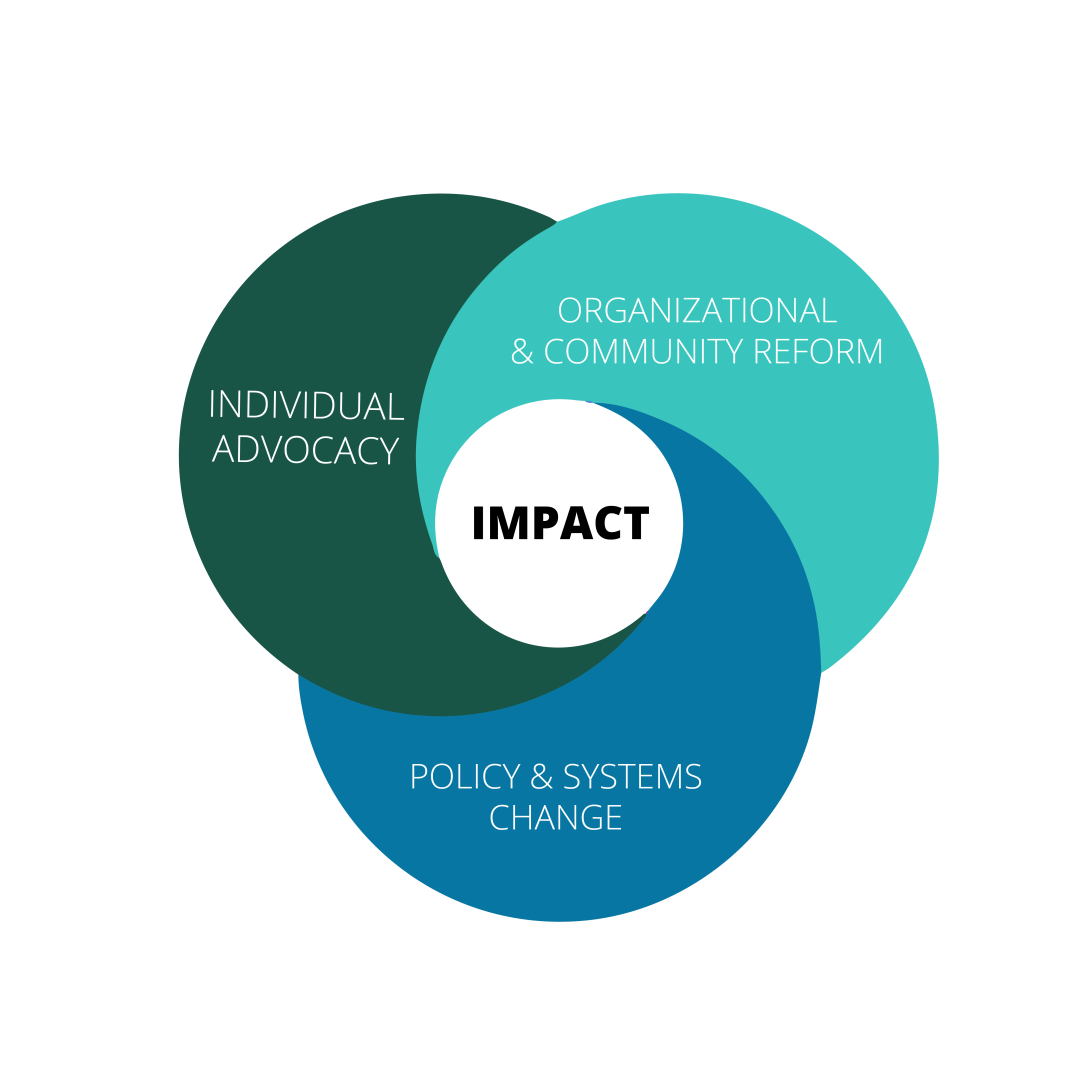












CSAJ’s Consumer Rights Newsletters share multi-level advocacy strategies by and for the field on ways to address the economic harm experienced by victims and survivors of domestic violence. In this edition, we discuss the prevalence and connection between domestic violence and consumer rights, then share advocacy resources to support different stages of advocacy and address specific consumer legal issues survivors may face.
The Consumer Rights Newsletters are part of CSAJ’s Consumer Rights for Domestic and Sexual Violence Survivors Initiative, a national project that builds on the capacity of and builds partnerships between domestic violence and consumer (anti-poverty) lawyers and advocates.
Section 1: Landscape of Consumer Law and its Link to Domestic Violence
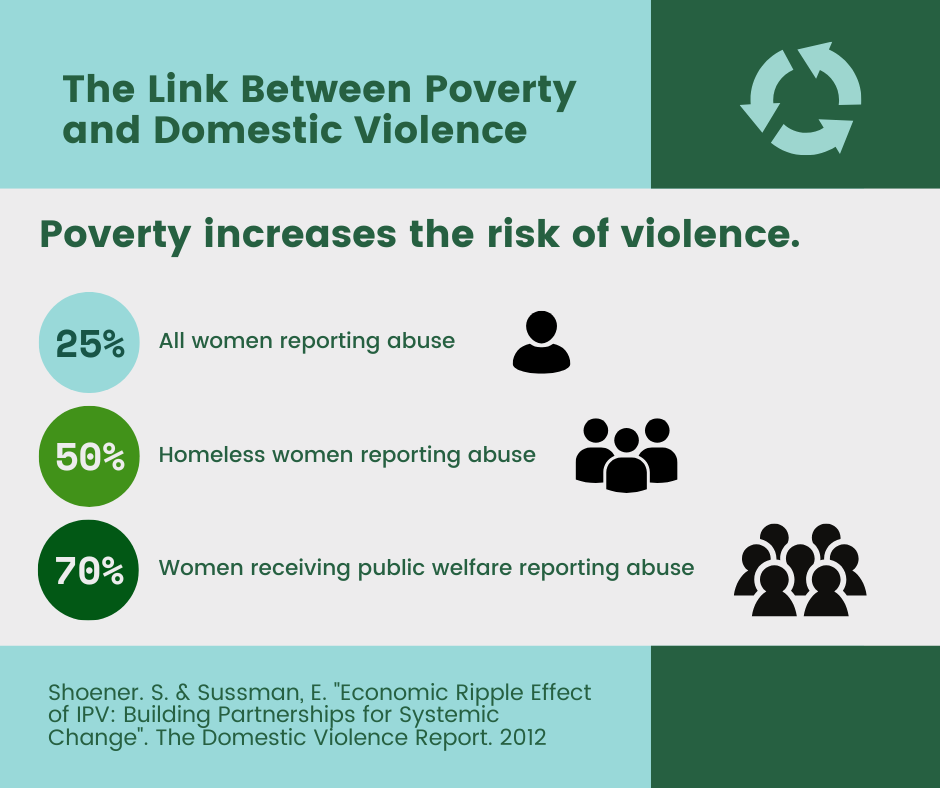
Survivors of domestic violence face profound and long-term economic harms that impact their options for safety. Abuse creates economic hardship, and poverty, in turn, restricts options for safety – these harms build on each other over time in what we call the “economic ripple effect of violence.” Many of these economic harms are known as “consumer rights issues.”
Consumer Rights Advocacy includes a range of legal and nonlegal strategies that can equip survivors with critical information and tools to address these economic harms and costs that stem from abuse and poverty.

Safety for Survivors Requires Economic Security.
Our Safety Requires Economic Security Factsheet illustrates the impact of economic abuse and speaks to how it impacts the lives of survivors. It highlights that nearly all (99%) survivors experience economic abuse at some point during their relationship (in ways that prevent, control, and exploit access to economic resources).
Economic abuse can leave survivors with a range of consumer rights issues. The fact sheet reports that:
52% of survivors had an abusive partner put debt in their name through a fraudulent or forced transaction (known as “coerced debt”)
71% of survivors said their partners had kept financial information from them46% of survivors had their credit report or score hurt by the actions of an abusive partner
62% of survivors discovered fraud through creditor or bill collector contact
Section 2: Bridging the Gap Between Consumer Law and Domestic Violence:
A Guide to Cultivating Meaningful Partnerships
“When we began this work, there was a literal gap. At a groundbreaking conference session, on one side of the room, were domestic violence advocates and on the other side were consumer advocates, both working with survivors but neither understanding the need for collaboration. Survivors were falling between the cracks. Over the past 17 years, CSAJ’s Consumer Rights for Domestic Violence Survivors Initiative has bridged that gap, building capacity and partnerships to enhance economic justice for survivors across the nation.” Erika Sussman, Founder and Executive Director of CSAJ
Bridging the Gap: From Starting Conversations to Building Partnerships to enhance consumer rights for Survivors
CSAJ has many resources that can help bridge the gap, first by getting comfortable Starting the Economic Conversation with Survivors. In this section, we share various advocacy tools for domestic violence advocates, domestic violence lawyers, and consumer lawyers to assess for economic abuse, identify or screen for legal issues, and partner to address economic abuse and consumer legal challenges that survivors face.
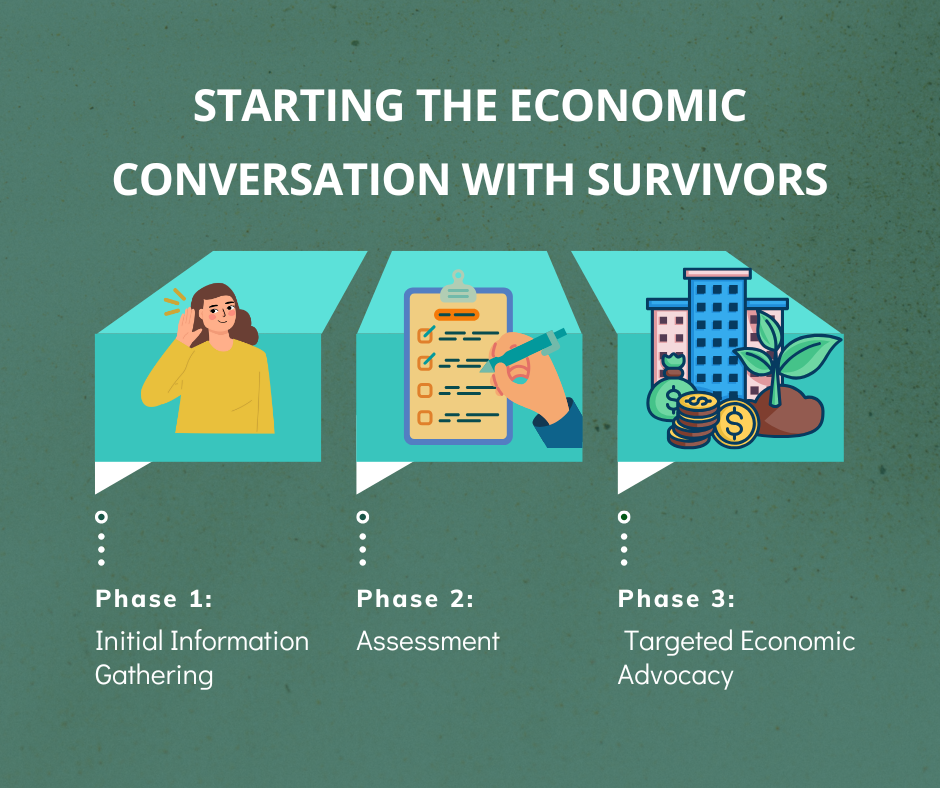
Advocacy Tips for Full & Open Assessment: CSAJ’s Assessment & Resource Tool provides a starting point for attorneys and advocates interested in enhancing their consumer rights advocacy, with self-reflection questions, suggested protocols and strategies, and additional resources.
Advocacy Tools to Screen for Legal Issues: Consumer Rights Screening Tool for Domestic Violence Advocates and Lawyers: To provide effective legal representation and advocacy, domestic violence attorneys and advocates must have an understanding of the common types of consumer problems faced by survivors, as well as the skills and resources necessary to gather a complete picture of their clients’ risks, including their economic risks. This screening tool provides a general overview of common consumer issues survivors face and offers concrete guidance on how to identify these issues.
Domestic Violence Screening Tool For Consumer Lawyers: This document helps consumer lawyers determine who, among their clients, is a survivor of domestic violence in order to enhance their legal representation and advocacy in trauma-informed ways. This screening tool helps underscore:
1)The experience of domestic violence often impacts the risks that an individual client faces, and therefore, significantly shapes their advocacy needs;
2)The context of domestic abuse impacts legal strategizing—the nature of the legal claims, the defenses available, the presentation of the case (testimony, evidence, arguments), and the types of remedies to pursue.
Advocacy Guides for Building Partnerships & Targeted Economic Advocacy:
💭 Building your understanding: The Economic Ripple Effect of IPV
🤝🏽 Building meaningful partnerships: Building Partnerships for Economic Justice
✍🏽 Building your skills relating to consumer advocacy for survivors: Guidebook
📚 Building your knowledge on coerced debt: Compendium on Coerced Debt
These tools are a starting point to begin to bridge the gap. If you have any specific questions about deepening partnerships, we encourage you to reach out for technical assistance by contacting info@csaj.org.
Section 3: The Landscape of Consumer Law to Support Survivors
Economic abuse often results in coerced debt, where harm-doers accrue debt in a survivors’ name through fraud or coercion. Data shows that 99% of survivors experience economic abuse, and over 52% of survivors report having experienced coerced debt. In addition to creating debt loads that are hard to pay off, coerced debt damages survivors’ credit scores which, in turn, may result in being denied access to housing, employment, a car loan, a cell phone, and other basic resources needed for safety. CSAJ’s Consumer Rights Initiative equips attorneys and advocates with legal and non-legal advocacy strategies that help survivors access coerced debt relief. Some states have laws that provide relief to survivors of economic abuse and/or coerced debt. Attorneys and advocates in these states can use these legal remedies to help survivors access coerced debt relief and support their safety. These states include:
Connecticut
Minnesota
Texas
Maine
California
If you advocate in one of these states and would like technical assistance to enhance your individual advocacy for survivors who have experienced coerced debt, you can reach out to CSAJ with a TA request at info@csaj.org.
This project is supported all or in part by Grant No. 15JOVW-22-GK-04011-MUMU awarded by the Office on Violence Against Women, U.S. Department of Justice. The opinions, findings, conclusions, and recommendations expressed in the publication/program/exhibition are those of the author(s) and do not necessarily reflect the views of the Department of Justice, Office on Violence Against Women.